
 admin
admin 
If you’ve started searching for the best web hosting in Australia, you’ve probably noticed the same problem everyone runs into: every provider claims to be the fastest, the most secure, and the best value. The plans all start to blur together, and it’s easy to end up choosing hosting based on nothing more than which page you happened to land on first.
The truth is that the “best” web hosting isn’t a single plan it’s the plan that matches what you’re actually building. A portfolio site, a growing online store, and a busy WordPress blog all have different needs, and choosing hosting without thinking that through is how people end up paying for resources they don’t use or outgrowing a plan within a few months.
This guide walks through exactly what to look for in Australian web hosting, what actually affects your website’s speed and reliability, and how to match a plan to your website instead of the other way around. You can see how WebFulHost approaches these essentials on our Australian web hosting page.
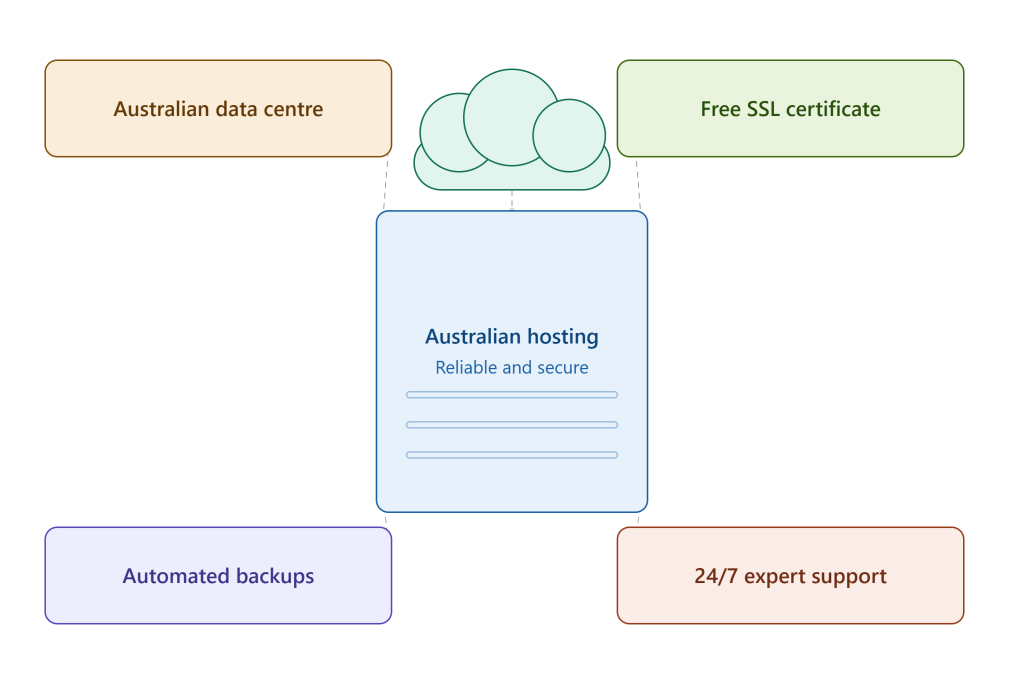
Why “Best” Web Hosting Depends on Where Your Visitors Are
Before comparing features, it’s worth understanding why location is one of the biggest factors in hosting performance especially if most of your visitors are in Australia.
When someone visits your website, their browser has to send a request to your hosting server and wait for it to respond. The physical distance between your visitor and your server adds to that wait. If your server is on the other side of the world, every page load carries a small delay before a single image or line of text even starts to appear.
For a website built for Australian customers, that delay adds up in ways that matter:
- Slower page loads can push visitors to leave before your site finishes loading.
- Search engines factor in page speed, so a slower site can quietly hurt your visibility.
- Local data centres typically mean your content reaches Australian visitors faster and more consistently.
This is why hosting built specifically for Australian websites with servers, support, and pricing designed around a local audience tends to outperform hosting that treats Australia as an afterthought. You can read more about how this plays out on our homepage.
The Features That Actually Matter When Comparing Hosting Plans
It’s easy to get distracted by long feature lists. In practice, a handful of things do most of the work in determining whether your hosting is genuinely good.
1. Storage That Matches Your Website
Not every website needs the same amount of storage. A simple brochure site or blog uses far less space than a store with hundreds of product images and customer accounts. Look for NVMe SSD storage, which retrieves files and database content noticeably faster than older storage types — this directly affects how quickly your pages load.
2. A Free, Properly Configured SSL Certificate
SSL certificates encrypt the connection between your website and its visitors, and enable the secure “https” padlock browsers now expect. Without one, browsers actively warn visitors that a site isn’t secure — which is a fast way to lose trust, especially on contact forms, login pages, or checkout flows. Good hosting includes this automatically, at no extra cost.
3. Automated, Regular Backups
Backups matter far more than most people realise until something goes wrong — a failed plugin update, an accidental file deletion, or a hacked account. Hosting with automated daily or weekly backups gives you a way to recover quickly instead of rebuilding from scratch.
4. An Easy-to-Use Control Panel
cPanel is the industry standard for a reason: it puts your domains, files, databases, email accounts, and SSL settings in one place, without requiring command-line knowledge. If you’re not a developer, this single feature can be the difference between managing your own website confidently and needing to pay someone else for every small change.
5. Uptime You Can Rely On
A website that’s frequently down costs you visitors, sales, and search rankings. Look for a 99.9% uptime guarantee as a baseline expectation, not a bonus feature.
6. Security Built Into the Hosting Itself
Malware protection and DDoS protection should be part of your hosting, not something you bolt on separately later. This matters more as your website grows and becomes a bigger target.
7. Support That Understands Australian Hours and Needs
When something breaks, you want support that responds quickly and understands the context of running an Australian website — from .com.au domains to AUD billing. 24/7 support is worth prioritising over almost any other add-on feature.
Matching a Plan to What You’re Actually Building
Once you know what to look for, the next step is being honest about what your website needs right now — with room to grow.
- Personal websites, portfolios, and small blogs generally do well on an entry-level shared hosting plan. You don’t need heavy resources you need reliability, security, and an easy setup.
- Small business websites benefit from a plan with room for a handful of professional email addresses, solid uptime, and enough storage for a growing services or product catalogue.
- Online stores need more headroom — more storage for product images, more capacity for customer accounts and order processing, and hosting that stays fast as traffic increases.
- Developers and agencies managing multiple sites need efficient tools for handling several domains, databases, and client accounts from one account.
If you’re starting out, it’s usually smarter to begin with a plan that covers your current needs comfortably rather than over-paying for capacity you won’t use for a year. Good hosting should let you upgrade whenever you grow, without migrating everything to a new provider. WebFulHost’s Launch plan is built around exactly this an affordable, beginner-friendly starting point for new websites that includes NVMe SSD storage, a free SSL certificate, weekly backups, cPanel, and 24/7 support, all priced in AUD.
Shared Hosting, WordPress Hosting, or VPS Which One Do You Need?
Not every website needs the same type of hosting, either:
- Shared hosting is the right starting point for most new websites it’s affordable, simple to manage, and covers everything from portfolios to small business sites and blogs.
- WordPress hosting is worth considering if you’re building specifically on WordPress and want an environment optimised for it. You can see how this works on our WordPress hosting page.
- VPS hosting makes sense once your website needs dedicated resources and more control for example, a high-traffic store or a custom application. Take a look at our VPS hosting options if this sounds like where you’re headed.
Common Mistakes People Make When Choosing Hosting
A few patterns show up again and again when websites end up with hosting that doesn’t fit:
- Choosing purely on the lowest advertised price, without checking what’s actually included once the introductory discount ends.
- Ignoring where the servers are located, which quietly affects speed for a local audience.
- Ignoring backups and security until after something goes wrong.
- Picking a plan with no upgrade path, which forces a stressful full migration later.
- Underestimating email needs, especially for small businesses that want professional addresses on their own domain.
Avoiding these mistakes is less about finding a “perfect” provider and more about asking the right questions before you sign up — which is exactly what the sections above are for.
Frequently Asked Questions About Choosing Web Hosting in Australia
What is the best web hosting for a new website in Australia? For most new websites — personal sites, portfolios, blogs, and small business pages — a starter shared hosting plan with NVMe storage, free SSL, automated backups, and cPanel access is usually the best starting point. You can always move to a larger plan as your website grows.
Does it matter if my hosting servers are located in Australia? Yes. If most of your visitors are in Australia, hosting with local infrastructure typically delivers your content faster and more consistently than hosting located overseas, which can improve both user experience and page speed.
Is cheap web hosting in Australia worth it? It depends on what’s included. A low price is only good value if the plan still includes essentials like SSL, backups, uptime guarantees, and support. Compare what’s included before comparing price alone.
Can I host a WordPress website on standard hosting, or do I need WordPress-specific hosting? Many shared hosting plans support WordPress well through one-click installers. Dedicated WordPress hosting can offer additional optimisation if your site is built entirely around WordPress and you want an environment tuned specifically for it.
How do I know when to upgrade my hosting plan? Signs it’s time to upgrade include slower load times as traffic grows, running low on storage, needing more email accounts, or launching features (like an online store) that need more resources than your current plan offers.
Do I need to move my domain to change hosting providers? No. You can usually keep your domain where it is and simply update its DNS or nameserver settings to point to your new hosting account. A full domain transfer isn’t normally required.
Ready to Choose Hosting That Grows With You?
Choosing hosting doesn’t need to be complicated once you know what actually matters: local performance, real security, dependable support, and a plan that can grow alongside your website. If you’re ready to see how this looks in practice, compare our Australian hosting plans or get in touch and we’ll help you match a plan to exactly what you’re building.