


Description
Turn a collection of pictures into a place people want to explore. Picture Gallery combines attractive image layouts, frontend contributions and built-in editing on your WordPress site. Build a portfolio, collect event photos or create a shared gallery for your community.
Visitors can search, browse and open pictures in a full-screen viewer. Contributors can upload and manage their own images. You choose the presentation, who can contribute and which submissions or edits need review.
Key features and benefits
- Choose the right presentation: Styled Tiles, Responsive grid, Picture cards and Justified rows cover compact photo walls, contextual cards and mixed portrait/landscape collections.
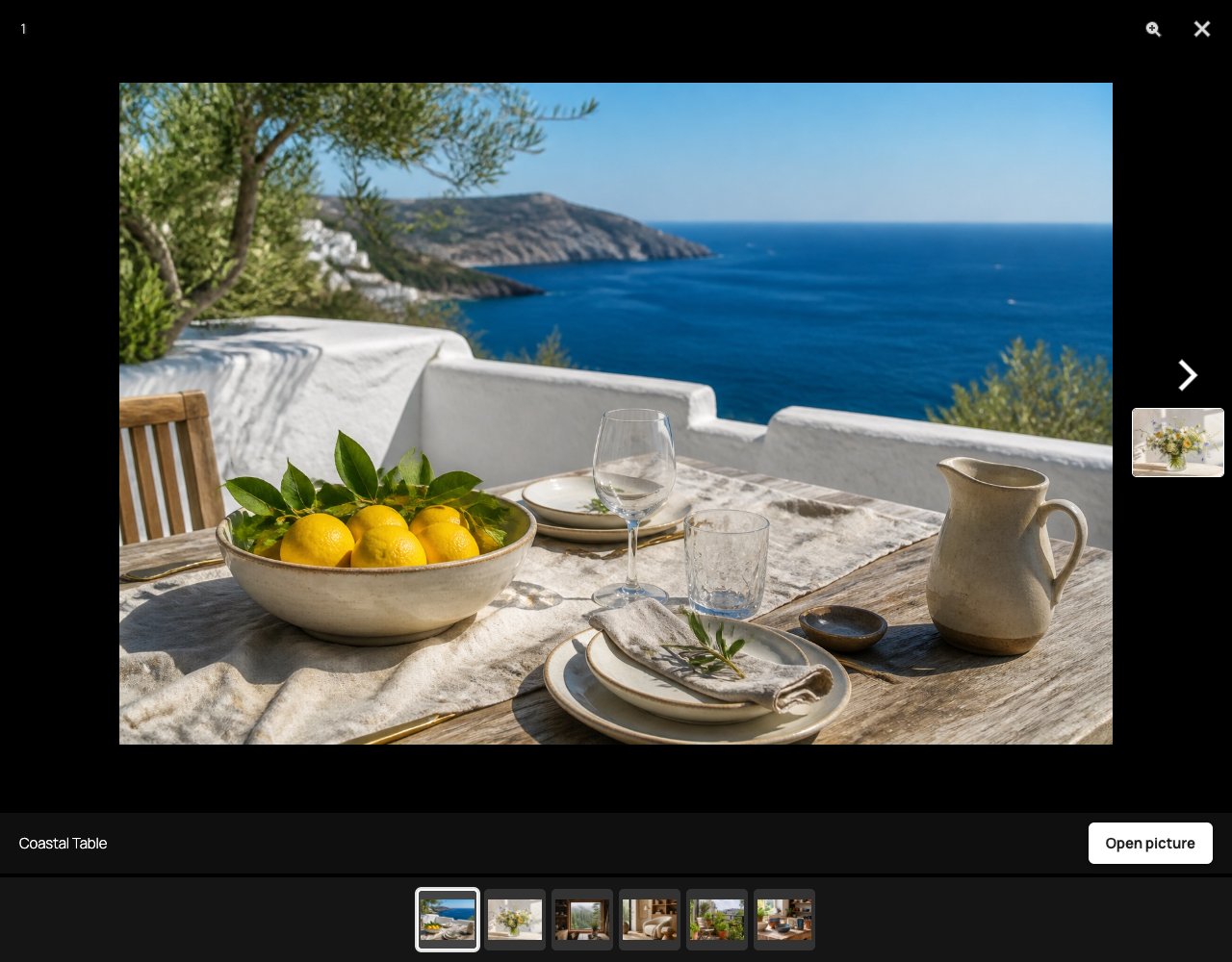
- Let pictures breathe: PhotoSwipe adds zoom, swipe and nearby-picture browsing, with optional thumbnails and a clear link to the picture post.
- Collect photos from your community: frontend batch uploads, drag and drop and an optional moderated guest form keep contributions close to the gallery.
- Give contributors their own workspace: My Pictures brings titles, captions, descriptions, alternative text and image tools together on the frontend.
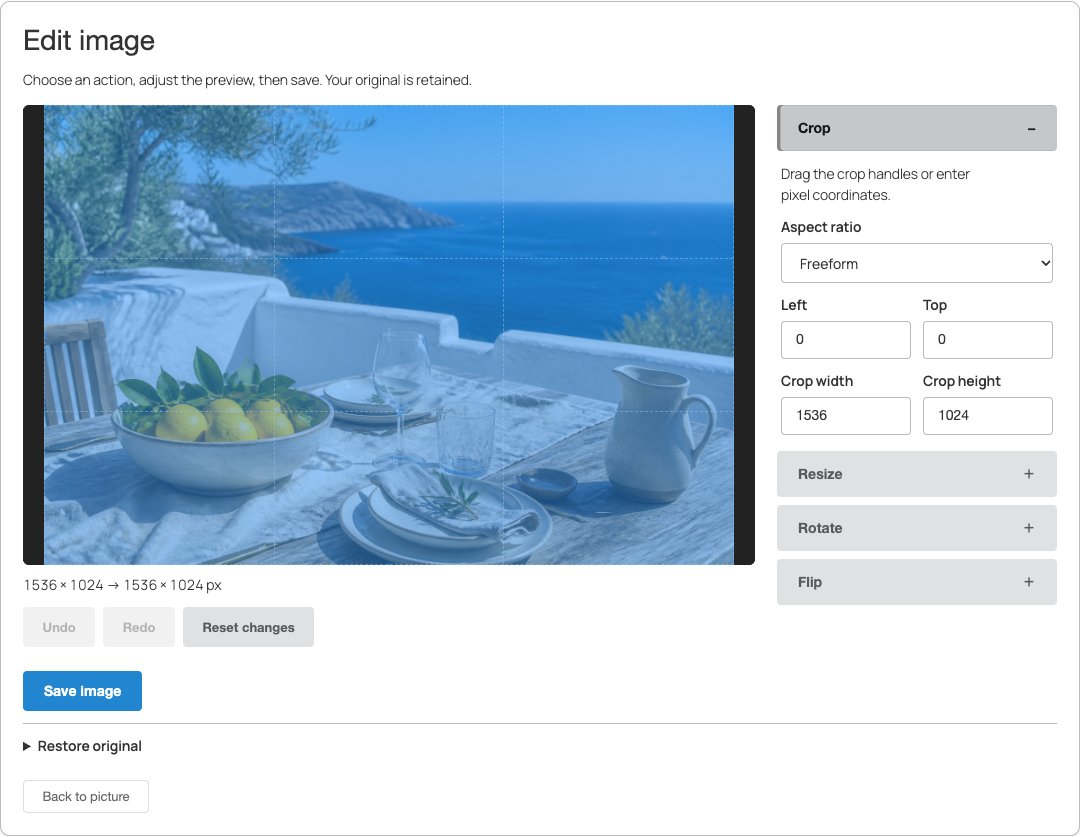
- Edit without leaving your site: crop, resize, rotate and flip supported JPEG/PNG images; preview changes, undo/redo and save with retained originals.
- Build in the WordPress editor: the native gallery block lets you select Pictures or import Media Library images and reorder them without writing a shortcode.
- Make large collections easier to explore: category/tag/name filters, sorting and pagination help visitors find the pictures they want. Optional layout buttons let them compare views.
- Review before changing public work: configure upload/publish roles and moderation. Image edits can await approval while the current public picture remains available.
The gallery, local PhotoSwipe viewer and image tools are included in the plugin. Image processing uses your WordPress host’s available image editor. Optional integrations are listed below.
Try the interactive gallery demo | Documentation and examples | WordPress.org support
Popular ways to use Picture Gallery
- Creator portfolios: present artwork, travel pictures, craft collections or photography with layouts that suit the images.
- Event and club galleries: let members contribute their pictures and review submissions before publication.
- Community photo collections: combine searchable galleries with personal My Pictures workspaces.
- A visual content library: connect optional video, rating and membership plugins when pictures form part of a broader creator site.
Create your first gallery
- Open Picture Gallery > Options > Quick setup and choose a presentation or contribution preset. Preview the concrete changes before saving.
- Select existing Pictures, import Media Library images or upload a small test collection. Original attachments are retained, and later Picture edits are not overwritten by repeating an import.
- Add the native gallery block or a listing shortcode to a page. Choose the layout, filters and viewer.
- Test browsing and, if enabled, upload and review with a separate contributor account.
Quick setup retains existing roles, access settings, storage and pages. Advanced options and standalone upload/import tools remain available.
Contribution, editing and review
Member uploads accept configured JPG, PNG and GIF files; compatible mobile browsers can choose camera or photo-library images. The optional guest form includes moderation, rate limits, notification email and configurable Google reCAPTCHA v3. Upload Journals help administrators inspect an interrupted request and its review state.
My Pictures provides picture-local text and image editing. Choose one tool, expand its controls and preview the result. Edits can remain pending while the existing public image stays available. Restore original composition creates a fresh generation while retaining the original and normalized master. Image Edit Journals support inspected recovery and explicit cleanup of proven unused edit files after a retention period.
Optional Media Capture integration adds webcam photos, screen snapshots and a shared upload entry. New captures normally become reviewed Gallery drafts; direct publication requires the administrator’s explicit choice and the creator’s native publishing permission. Original attachments and native Gallery editing remain separate from the capture app.
Practical control for site owners
- Configure defaults or per-listing layouts and filters, with an optional frontend selector.
- Enable stars, likes or both through Rate Star Review. Visitor eligibility and any paid voting remain the rating provider’s responsibility.
- Use FansPaysite light/dark mode and palette changes without reloading, or another compatible WordPress theme.
- Keep real picture links and page navigation when JavaScript enhancement is unavailable.
- Use WordPress Media Library relationships, picture taxonomies, EXIF orientation correction and bounded thumbnail processing.
- Retain existing posts, authors, URLs and media. Deactivation/uninstall preserve data; cleanup remains an explicit reviewed action.
- Optionally expose read-only picture/text inspection through WordPress Abilities for authenticated tools. It is disabled by default and cannot edit, publish or delete pictures.
- Use eleven included interface languages: Romanian, Spanish, German, French, Brazilian Portuguese, Japanese, Italian, Dutch, Polish, Turkish and Arabic. See the translation-status notice in the FAQ.
Optional integrations
- Media Capture: webcam photos, screenshots and shared creator intake.
- Rate Star Review: independent stars and likes across all four layouts.
- MicroPayments: supported creator subscriptions, individual purchases and site memberships. New member pictures can optionally show calendar or paid-start release information; native image visibility and approval still apply.
- Video Share VOD, Broadcast Live Video and Paid Videochat: related media and community workflows.
The gallery, uploader and editor work independently. Restricting a gallery does not turn an already public image URL into a private download. Choose an appropriate storage and delivery setup for restricted media.
Read the installation steps or ask a question in the support forum.
Third-party UI assets
Bundled Fomantic UI code is MIT licensed. Human-readable upstream source, reproducible distribution/build instructions, the exact local patch and font notices are in scripts/semantic/README.txt and scripts/semantic/asset-provenance.txt. Fonts retain their separately stated licenses. Build tools are not required on WordPress hosting.
Installation
- Install and activate Picture Gallery from WordPress Plugins.
- Open Picture Gallery > Options > Quick setup, choose or adjust a preset, click Preview setup changes, then Save reviewed setup. Use the advanced links for upload/publishing permissions, storage and access. Follow the standalone guide for community uploads or a Media Library portfolio. With automatic page setup enabled, save settings to create Pictures, My Pictures, Upload Pictures and Guest Picture pages.
- Choose a layout and menu/dropdown filters under Display. New installations use Responsive grid with PhotoSwipe and thumbnail navigation enabled. Saved preferences on existing sites are preserved.
- Review upload and publishing permissions before inviting contributors. Configure guest uploads and optional CAPTCHA if required.
In the WordPress block editor, add Picture Gallery. Show the latest pictures matching filters, or choose Selected pictures in manual order. Search existing Pictures, or choose Media Library images and click Import selected images. The confirmation explains the target media-library gallery and review policy. Imports create separate Picture posts, retain native originals, and can be retried safely after a failed response. You can copy the native title, caption and alternative text at first import; retries preserve later Picture edits and never change shared attachment text. JPEG, PNG and GIF are supported; offloaded images need a readable local file. Removing a selection or block does not delete pictures. Imported pictures awaiting approval are visible to their owner and authorized editors, then appear to visitors after publication.
Automatic page setup can be disabled. Add these shortcodes to your own pages instead:
[videowhisper_pictures]— browse authorized pictures.[videowhisper_pictures author_id="current"]— the current user’s pictures; requires login.[videowhisper_picture_upload]— member uploader.[videowhisper_picture_upload_guest]— guest uploader, declared in normal stored page/post content.[videowhisper_pictures layout="legacy" menu="1" viewer="photoswipe"]— Styled Tiles with a filter menu.[videowhisper_pictures layout="grid" menu="0" viewer="photoswipe"]— compact grid with dropdowns.-
[videowhisper_pictures layout="cards" menu="1"]— picture cards with a filter menu.[videowhisper_pictures source=”selected” picture_ids=”123,456″ layout=”grid”] uses the same ordered selection as the block. An empty selected list displays no pictures. Both forms enforce the same fresh image authorization; filters can further narrow the selection.
The stored shortcode value legacy means Styled Tiles and remains compatible with existing pages. Additional presentation overrides include columns, gap, show_title, show_caption and viewer_thumbs.
FAQ
Can a one-time site plan include pictures?
With MicroPayments 4.15.0+, an administrator can explicitly select site plans in the picture editor’s Site membership access box. Current plan access is checked inside the native image gate before gallery/viewer/rendition serialization. Publication/password, gallery/watch policies and extension vetoes remain authoritative. Independent native purchases and creator tiers stay separate; a site plan does not unlock unrelated external paid restrictions.
Keep compatible plugins active while using these rules. Retained plan rules fail closed when the supplying provider cannot verify them, including body/excerpt/REST projection; unselected pictures keep standalone behavior. Review/clear rules before downgrading both supplying plugins. This controls the plugin’s authorized views; it does not make an existing publicly addressable original private or recall bytes already received. Existing originals and native image editing/retention remain unchanged.
Can creators take webcam photos or screenshots?
Yes, with the optional compatible VideoWhisper Recorder creator-media workflow. The producer obtains an owned WordPress Media Library attachment, and Gallery independently validates the image, copies it into its own storage, creates a draft and runs native image processing. Original attachments and files are retained, even when the separate standalone import setting removes unreferenced import files. The workflow never assigns a price or access grant.
New workflow captures default to Review before publishing. The result opens the native WordPress Picture post editor, where the creator can review details and use the existing Publish/Submit interface allowed by their capabilities. Gallery’s frontend image tools remain available separately. Publish directly when permitted requires both the saved mode at first handoff and the current direct setting, along with native publishing capability and the configured publishing policy. Changing the mode does not automatically publish earlier drafts. Failed or incomplete processing retains a draft for review.
This setting applies only to the new creator workflow. Existing standalone uploads, imports, guest moderation, listings and image/detail editing keep their established behavior. A draft post is not a protected-storage service: retained Media Library attachments and image files follow your hosting and access configuration. Publicly reachable file URLs remain public.
Which languages are included?
The plugin includes these translations: Romanian (ro_RO), Spanish (es_ES), German (de_DE), French (fr_FR), Brazilian Portuguese (pt_BR), Japanese (ja), Italian (it_IT), Dutch (nl_NL), Polish (pl_PL), Turkish (tr_TR) and Arabic (ar). WordPress selects the site language for visitors and each user’s chosen language for the dashboard and block editor. Arabic follows WordPress’s right-to-left direction. Translations cover plugin controls and messages, not visitor-submitted picture titles or descriptions. WordPress.org language packs take precedence when installed.
Translation disclaimer: bundled translations may be generated and reviewed by AI agents. They are provided as a starting point and should be reviewed for your site before use, especially publication permissions, billing, access and consent wording. Corrections and new languages are welcome through the support forum.
Can AI agents inspect my galleries?
On WordPress 6.9+, enable Read-only AI-agent integration in Picture Gallery > Options > Server. It is disabled by default, including on upgrades. Picture Gallery requires WordPress 6.9+ and PHP 8.2+.
The registered abilities are picture-gallery/search-pictures and picture-gallery/get-picture. They require an authenticated WordPress user with read permission and apply the same picture visibility, ownership, gallery, membership and extension veto rules as image browsing. Search published pictures or your own pictures (including your own unpublished items), filter by title/text search and gallery slug, or find missing picture-local alternative text/captions. Inspection returns current title, caption, description, picture-local alt text, publication status and processing state. Missing alt is not replaced with a guessed description. Responses contain no image-file URL fields, physical paths, arbitrary post metadata, journal secrets or pending replacement text from review journals.
Search accepts scope (published or mine), search, gallery, needs_text (any, alt, caption), per_page (1–25, default 10) and page (0–20, default 0). Results are ordered by descending ID and filtered for access before pagination. At most 1,000 candidates are examined per call; scan_limited means narrow the search rather than assuming the results are exhaustive. No hidden-picture IDs or total counts are returned. get-picture requires picture_id.
For MCP access, separately install the WordPress MCP Adapter and configure an authenticated compatible client using its documentation. The adapter’s default server exposes these abilities through its discovery and execution tools. A Site Manager OAuth connection does not automatically authenticate this separate endpoint. Picture Gallery adds no AI provider, account registration or outbound AI requests; your chosen client controls any further processing of the text it receives.
These abilities cannot edit, publish, upload, purchase content, delete files or start thumbnail repair/import. Turning the setting off removes registration on subsequent requests and denies execution through an already resolved ability. WordPress Abilities API REST access uses authenticated GET requests; client connection and credential requirements are managed by WordPress/the adapter. Abilities and MCP compatibility do not require an MCP server for normal gallery use.
Is the gallery and image editor free?
Yes. The included gallery layouts, local PhotoSwipe viewer, frontend uploader and image tools are part of the plugin. Optional companion plugins have their own requirements.
What does my hosting need?
WordPress 6.9 or newer and PHP 8.2 or newer. Image tools use WordPress’s available GD or Imagick backend. Available memory, supported formats and image dimensions determine which files can be processed. Processing limits reject oversized work rather than promising unlimited editing. No FFmpeg or streaming server is needed for picture editing.
Why does a small JPEG report insufficient processing memory?
Compressed file size is not the memory needed to decode and transform an image. Pixel dimensions and the selected backend matter: ImageMagick HDRI can require substantially more memory than GD. Automatic now allows up to 512 MiB for HDRI and 256 MiB for other supported backends, reduced by the real PHP limit, current usage and a safety reserve. GD is no longer charged the HDRI estimate merely because Imagick is installed.
Under Picture Gallery > Options > Display > Image processing budget (MiB), choose Automatic or 128, 256, 512, 768 or 1024. The vwpg_image_memory_budget filter remains supported and receives the selected budget in bytes. The setting does not raise PHP or hosting limits or remove image-dimension checks. A 1536 × 2048 JPEG that exceeded the old 256 MiB HDRI policy can pass the new automatic budget on a sufficiently provisioned host; more demanding files may still need resizing or hosting adjustments. Changes saved here survive plugin updates; do not edit plugin source files to configure the budget.
What can users edit?
Authorized owners can crop, resize without enlarging, rotate in quarter turns and flip horizontally or vertically. Crop coordinates follow the rotation and flips. Every save starts from the normalized master, avoiding repeated edits to a compressed preview. JPEG and PNG are editable; animated GIF editing is unavailable. Edit content opens the included picture details editor: title, caption, description, alternative text, and selection of existing categories and tags. Text changes use plain text; unchanged existing formatting is retained. The optional MicroPayments content-management link remains available separately for membership and monetization.
Will edits change a public picture before approval?
Users without the required publish permission send edits for review. Existing public media stays unchanged. An authorized moderator opens the picture’s editor to approve its pending generation. Restore original composition follows the same review rules. Picture details have a separate review submission: published details stay visible by default until approval. Under Display, administrators can choose to move published pictures to draft when users without publishing permission edit their details. The frontend warns before saving; approval restores the previous publication state. Moderators use Edit content to review and approve the submitted values. Changes made independently through the WordPress editor invalidate stale approval.
Can I preview the layouts before choosing site settings?
Yes. Enable Administrator frontend demo switcher under Display. Administrators get a closable Gallery preview box on listing pages. Choose Styled Tiles, Responsive grid, Picture cards or Justified and menu or dropdown filters, then Apply. Only that administrator’s current view changes; global settings are not saved and ordinary visitors cannot use the preview controls. Blueprint demos enable it automatically.
How do I recover an interrupted image edit?
First use the editor’s save-status check before trying another save. Administrators can inspect Picture Gallery > Image Edit Journals. Recovery acknowledges an already committed generation or places a complete candidate into pending review only if its base media and owner are unchanged. It never repeats a partly processed recipe. Active/orphaned media locks, changed sources, incomplete candidates and ambiguous older records require manual review; no forced takeover is offered.
Can I clean up old edit files?
Files are retained indefinitely by default. In Image Edit Journals, explicitly abandon unfinished work where appropriate, then allow cleanup for a terminal edit. This starts a fresh seven-day hold. Preview the edit again after the deadline before applying cleanup. Only proven, unchanged, disconnected edit files and their own header-only attachments are eligible. Originals, masters, previews, active/pending/previous generations and shared or ambiguous files stay protected. Older journals without creation evidence remain retained. No automatic deletion runs. Compact request receipts remain to prevent replay; edit-history and owned-file limits still apply to retained work.
Will my existing pictures still work after updating?
Yes: existing posts, URLs, authors, galleries and media are preserved. Encountered pictures are inventoried on demand, with a small queued batch for listings/views and immediate inventory on authorized editing. Missing or ambiguous files require administrator repair instead of a destructive guess. Existing explicit layout/click choices remain; select PhotoSwipe under Display to enable it for those listings.
How do responsive previews and Justified rows work?
Responsive image previews are enabled by default under Display and can be turned off. Encountered, authorized pictures queue a background job. WordPress scheduled tasks generate up to three uncropped sizes and a sharper cropped preview from the current approved JPEG or PNG display image. WebP and AVIF are added only when the selected backend and site upload policy support them; JPEG or PNG stays available as a fallback. Originals and pending edits are never included in the new responsive candidate lists. This adds modern-format output, not WebP/AVIF uploads or editing.
Justified rows preserve the available uncropped preview’s proportions. Choose Justified in Display or in the block, or use [videowhisper_pictures layout="justified" row_height="180" gap="4"]. The block exposes Target row height (100–400 pixels). The final row stays compact and small images never enlarge beyond their available rendition pixels. Filters, My Pictures, PhotoSwipe, reviews and membership checks work as in other modern layouts. Without JavaScript, images and picture links remain available in a wrapping layout.
Existing thumbnails remain visible until background processing finishes. A site with disabled or unreliable WordPress scheduled tasks needs its administrator to run those tasks. Processing is limited to one picture, four geometries and twelve files per rendition-queue request; oversized, ambiguous or changed media stays on existing previews. Files are retained; this feature does not enable automatic cleanup. Retained image-history limits can require administrator review before further generation.
Why are thumbnails not all the same size?
Previews are never stretched beyond their available pixels. When thumbnail settings change, encountered outdated thumbnails queue a bounded refresh; the administrator thumbnail tool can advance the rest. Small originals remain small. Cards reserve room for text; Responsive grid keeps a tighter image-focused presentation.
Can listings show ratings and likes?
Yes, with the optional Rate Star Review plugin and its Picture Gallery integration enabled. Available star ratings appear in listings. Voting also requires the picture post type and the picture’s category to be enabled in Rate Star Review. Its login, retract-vote and optional payment rules still apply. Compact layouts show votes above stars at the lower left; cards place them beside the image.
Can I restrict access or sell pictures?
Gallery rules and supported membership integrations control listing/viewer authorization. They do not protect direct public upload URLs. Use an appropriate protected-file delivery solution if preventing direct downloads is required.
What happens when a picture is deleted?
Media is retained by default, including after permanent picture deletion, plugin deactivation or uninstall. Media Maintenance provides inventory/backfill previews and an opt-in policy for future deletions. Purge waits at least 24 hours and requires a separate cleanup batch. Shared, changed, ambiguous and legacy files without creation provenance are preserved. On multisite, physical media cleanup remains disabled because site-local scans cannot establish cross-site ownership.
What happens after an interrupted upload?
Use Check / resume upload or Retry same file with its original fields instead of starting another copy. A request identity prevents duplicate imports; changed bytes/fields conflict. Member self-service requires the original login session. Upload Journals lets administrators inspect and recover eligible unfinished work to pending review, or explicitly abandon unchanged unpublished drafts. Media retention defaults to indefinite; opt-in abandoned-upload cleanup has a fresh seven-day hold and separate preview/apply steps. Recovery requires the original single processing host, working local locks and unchanged storage; changed hosts or ambiguous state require review.
Does the plugin send images to an external service?
Gallery browsing and image editing run locally. The optional reCAPTCHA service is described below. Images are not sent to an external image editor. Companion plugins and theme services have their own disclosures.
Guest form validation and privacy
Each guest form has its own controls and nonce. Shortcode owner, gallery, category, tag, description and email settings are authoritative; submitted hidden fields cannot override them. Errors preserve valid text fields and ask the visitor to select the picture again. The ordinary HTML form works without JavaScript when reCAPTCHA is disabled. All guest submissions remain pending, including submissions from a logged-in administrator.
The default attempt limit is 20 per connection per hour, including failed form and verification attempts. It uses the web server connection address, ignores forwarded browser headers, and stores only a keyed address hash, count and expiry in a non-autoloaded counter. Counters expire after one hour; subsequent guest attempts with the attempt limit enabled remove up to twenty expired counters. Expired records can remain stored until that later cleanup. Set Guest Upload Attempts per Hour to 0 to disable this tracking. The separate Limit Uploads per IP setting counts existing guest pictures, including pending, draft and trashed items; uploader email and IP metadata remain with those pictures. Shared connections share limits. Configure trusted client addresses at the web server when using a reverse proxy.
Google reCAPTCHA v3 is optional and loads only on guest form pages after an administrator configures a site key. Google’s browser script receives visitor/browser information and issues a token for action vwpg_guest_upload; submitting the form sends that token and the configured secret from the server to Google’s verification endpoint with an eight-second timeout. Missing, failed, low-score, wrong-action, wrong-host or malformed verification responses block intake. See reCAPTCHA, Google Privacy Policy and Google Terms. Disable the site key to remove this integration. No uploader email, description or image bytes are sent by the plugin’s verification request.
Where do I approve guest pictures or inspect an upload review error?
A successful guest submission is pending publication. In WordPress admin, open Pictures > All Pictures > Pending, review the picture, then select Publish. Guest Upload settings and Upload Journals include a Review pending pictures link for administrators. Notification email is optional; missing mail does not prevent reviewing pending pictures.
This upload needs administrator review is a processing/recovery hold, not confirmation of a pending picture. Keep the original browser and upload reference. Open Picture Gallery > Upload Journals (/wp-admin/admin.php?page=vwpg-uploads) and inspect that reference. Recover only when offered, then review and publish the recovered pending picture. Do not force a changed host, replaced lock or modified draft, delete request receipts, or create repeated copies. A failure before journal creation may leave no matching journal: give the administrator the displayed error code and reference. Check configured upload storage and writable local temporary storage with reliable file locking. Version 1.8.1 accepts a legitimate symlinked temporary root while still rejecting symlinked operation directories and lock files. This is a verified portability fix, not a diagnosis of every host reporting the generic hold.
Exclude guest pages from full-page caching and retain the browser cookie. Switching browsers creates a separate request and does not recover the previous one. See the guest-upload guide.
Durable guest uploads and browser receipts
Guest uploads use a signed browser-bound form and WordPress admin-post transport. The server reloads the matching shortcode from its stored page/post content before accepting a new request and before promoting processed media. Browser-submitted owner, gallery or hidden defaults never grant authority. Changed/removed forms, unreadable/password-protected content, stale grants and a different browser/login context stop processing. Guest forms must be declared in normal readable post/page content; dynamically injected widget/template/builder forms without a matching stored declaration fail safely and need a supported integration.
A successful or authorized failed POST redirects with HTTP 303 to a GET receipt. Reloading a receipt performs no image processing or publication. Each browser/form retains the same request identity across reloads and lost POST responses; an exact retry acknowledges its existing picture and changed bytes/metadata conflict. Check upload reads its state; Resume stored upload is a separate nonce-protected POST, always pending for unfinished guest work. Do not start another copy after uncertainty. If the original intake is missing, select the same picture and original field values; otherwise contact the administrator with the upload reference. Active workers, replaced temporary locks, changed files/roots and human-edited drafts require review. Recovery uses the same single-host safeguards as member journals.
Submit another picture is an explicit POST after completion or abandonment. An atomic private current-request pointer prevents an old tab from silently replacing a newer request. Guest upload cookies are site-specific, HttpOnly, SameSite=Lax and Secure on HTTPS, expire after seven days, and contain only a random browser secret. Logged-in receipts additionally depend on that WordPress login session. Clearing cookies, switching browsers/logins or expiring the browser cookie loses self-service access; administrator journal inspection remains available. Exclude guest-form pages from full-page caches: the plugin sends private/no-store headers, and a cached grant from another browser is rejected.
Guest receipts reveal no picture/file URL, private picture ID, email, description or raw browser secret. Authorized validation failures preserve bounded text in one ten-minute feedback transient per browser/form, without file bytes, CAPTCHA tokens or nonces; expired stored transients may await WordPress cleanup. Successful feedback clears those text fields. The shared private upload journal retains source relationships, request fingerprints and submitted guest title/email/IP/metadata under the existing retention policy. Minimal current-request pointers, completion receipts and cleanup tombstones are retained to prevent duplicate replay; do not delete these records independently. Administrator recovery/abandonment/retention also supports owner ID 0 guest drafts. Deactivation/uninstall preserve this history and media.
Moderator notification is attempted at most once after the guest picture commits. An interrupted claimed delivery is not sent again automatically, so mail can be missed; Upload Journals shows its notification state for administrator review. No automatic retry sends duplicate mail. Older authenticated integrations retain their existing responses; durable recovery requires a stable request identity.
Where can I report an issue or request a feature?
Use the WordPress.org support forum for plugin questions and feature requests. Include your WordPress/PHP versions and steps to reproduce the issue. Keep passwords and private media out of public reports.
Where do I report security bugs found in this plugin?
Please report security bugs found in the source code of the Picture Gallery plugin through the Patchstack Vulnerability Disclosure Program. The Patchstack team will assist you with verification, CVE assignment, and notify the developers of this plugin.
Screenshots




Changelog
1.11.2
- Added bundled local Fomantic icons to modern gallery filters and layout controls, with translated hover help.
- Included tooltip styling in component-based themes while retaining standalone gallery, editing, viewing and access behavior.
- Refreshed the workflow banner and curated layout/workflow screenshots.
1.11.1
- Correct member viewing of pictures that also offer an individual purchase. Native plan, gallery and independent purchase permissions remain authoritative.
- Show optional MicroPayments calendar release hints on picture cards without changing gallery permissions, purchases or originals.
1.11.0
- Add an optional MicroPayments one-time site-plan paid-gate adapter inside native picture authorization; retain gallery/watch rules and extension vetoes.
- Guard retained plan bodies, excerpts and REST projections when the provider is unavailable, with no global roles or original-file migration.
- Keep native picture purchases/creator tiers, standalone unselected galleries, editing and retained originals unchanged.
1.10.0
- Add the optional creator-media image provider for webcam photos, screenshots and workflow image uploads, without requiring Recorder for standalone Gallery features.
- Create a draft before copying or processing, retain native originals, record provider-owned image relationships and resolve repeated handoffs to their existing picture.
- Default new captures to review; add an explicit administrator direct-publication choice that still requires native capabilities and configured publishing permission.
- Add Quick setup presets with exact preview/save, preserve unrelated settings and link optional integrations without installing, activating or registering accounts.
- Refresh all eleven bundled locales for the new workflow and setup controls.
1.9.0
- Let visitors choose Styled Tiles, Responsive grid, Picture cards or Justified rows with compact Fomantic buttons. Disable the frontend selector under Display for a fixed layout.
- Independently enable star ratings, likes or both in listings, with native Rate Star Review rules and clear paid-vote detail links.
- Keep picture viewing permissions, uploads, originals and image editing unchanged.
1.8.2
- Remove automatic Google Fonts and conditional Twemoji CDN requests from bundled UI CSS; retain existing local fonts and include authentic source/license notices.
- Keep classic gallery listing IDs consistent between shortcodes and AJAX controls, including IDs containing punctuation.
- Encode category, order, search and page controls for their JavaScript and HTML contexts; search text stays within its own query fields.
- Existing gallery visibility, image editing, uploads, originals and recovery rules are unchanged.
1.8.1
- Accept canonical local temporary roots exposed through symlinks without weakening operation-directory, lock-file or worker checks.
- Separate guest recovery holds from pending publication, show safe error codes/references, and link administrator approval and journal screens.
- Move the plugin homepage to FansPaySite with current demos and guest-upload guidance.
1.8.0
- Fix false memory rejections with backend-aware estimates, an automatic HDRI budget and a saved administrator memory-budget setting.
- Add background responsive previews with sharper cropped tiles, uncropped sizes and conditional WebP/AVIF output, retaining JPEG/PNG fallbacks and original files.
- Add Justified rows to shortcodes, the gallery block, display settings and administrator previews, with bounded row-height controls and the existing image authorization rules.
- Target WordPress 6.9+ and PHP 8.2+; existing pictures and presentation opt-outs remain intact.
1.7.29
- Add Japanese, Polish and Turkish translations and refresh the other eight catalogs (Spanish, Brazilian Portuguese, French, Dutch, German, Arabic, Italian and Romanian) with consistent terminology.
- Translate the guest-upload notification subject, message and success text when they still contain the default English text; make picture, channel, views, resolution and duration labels full translatable sentences; make short admin headings and notices translatable and add translator notes.
1.7.28
- Add Italian and Romanian translations and refresh the Spanish, Brazilian Portuguese, French, Dutch, German and Arabic catalogs.
- Make remaining upload, import, legacy gallery and block editor messages translatable, and clarify wording across upload, import and gallery filter labels.
- Add accessible labels to icon-only Search and Reload buttons.
1.7.27
- Complete Spanish interface coverage and add Brazilian Portuguese, French, Dutch, German and Arabic catalogs for PHP, the block editor and frontend tools.
- Refresh setup, gallery, image-editing and optional read-only AI-agent benefits in the plugin description.
1.7.26
- Optional read-only WordPress Abilities API integration on WP 6.9+, with WP 6.5 compatibility retained.
- Authenticated agents can search authorized picture metadata and inspect text/processing status using existing image visibility and membership rules.
1.7.25
- Clearer setup guidance and visual layout choices, with existing settings preserved.
- Media Library imports can copy initial titles, captions and alternative text without overwriting later Picture edits.
- Repaired Spanish translation loading and refreshed setup, editor and frontend catalogs.
1.7.24
- Added a native Picture Gallery block, authorized Picture search and Media Library picker with explicit, recoverable imports that retain original attachments.
- Shared selectable layouts, filters, manual picture order, pagination and PhotoSwipe with shortcodes. Image visibility and membership rules apply on every request.
1.7.23
- Restore listing star ratings and provider-controlled voting, including after filtering.
- Keep compact tile/grid controls over the image and card metadata beside the thumbnail.
- Add an administrator-only layout/filter preview switcher, enabled in blueprint demos.
- Edit picture titles, captions, descriptions, alternative text and existing categories/tags in My Pictures. Lesser-role edits await approval; optionally move published pictures to draft.
1.7.22
- Clarify layout names, share menu filters across layouts and enable PhotoSwipe for Styled Tiles when selected.
- Suppress repeated My Pictures links in frontend menus without deleting saved menu items.
- Refine thumbnail tiles, resolution labels, hover effects and matching owner editing controls.
- Add administrator image-edit inspection, pending-only recovery and explicit retained-file cleanup safeguards.
- Refresh setup guidance, feature benefits, FAQs and layout screenshots.
1.7.21
- Fix block-theme navigation and comments assets loading before the document head.
- Keep compact grid image links clickable beneath title overlays.
- Include security hardening for custom CSS, picture metadata, import cleanup and administrator requests.
- Verify supported WordPress/PHP, upload recovery, media retention and release packages.
1.7.20
- Security: contain legacy custom CSS within its style element and validate/escape stored picture dimensions.
- Security: require a verified administrator import request before expired-file cleanup; harden admin callbacks, form nonces and legacy retention decoding.
1.7.19
- Keep PhotoSwipe navigation disabled until adjacent slides are ready, avoiding early-click blank viewers.
- Give the finalized complete, clickable arrow previews a fresh asset version.
1.7.18
- Show larger, complete previous/next previews below PhotoSwipe arrows, with a shared clickable and keyboard-accessible button.
- Keep navigation controls usable on touch and smaller screens without covering the caption.
1.7.17
- Remove custom green control colors and use neutral Fomantic buttons, palette-aware filters, and theme accents.
1.7.16
- Expand only the selected Crop, Resize, Rotate or Flip controls, with clear save and restore actions.
- Reuse FansPaysite Fomantic components and follow live theme changes across galleries and the image editor.
1.7.15
- Automatically prepare intact legacy pictures on demand from galleries, picture views and previews, and dashboard lists/editors.
- Share one idempotent importer with the frontend editor; background inventory stays bounded and preserves existing files.
- Back off failed imports and retry changed legacy media without a site-wide upgrade scan.
1.7.14
- Open image tools directly when entering Edit image, with retry and specific loading, format and repair messages.
- Safely inventory intact legacy JPEG/PNG media on an authorized editor-opening request; ambiguous media remains preserved for review.
- Give Edit content and Edit image clear buttons in a separate row so status badges cannot cover them.
1.7.13
- Distinct compact grid and metadata cards; thumbnails never stretch beyond configured or intrinsic dimensions. Long legacy titles wrap within their tiles.
- Queue outdated thumbnails on listing reads; bounded background processing and Media Maintenance batches preserve active edited compositions and originals.
- PhotoSwipe includes an Open picture button, image-to-post click, previous/next thumbnail previews and an optional default-on moving thumbnail strip. Authorized neighbors load across listing pages in bounded windows.
- Frontend owner crop, aspect-preserving resize, quarter-turn rotation and both flips with numeric/drag selection, preview, undo/redo, immutable generations, review/approval, restore and save-status recovery. JPEG/PNG editing uses local WordPress image tools.
- Strict object permissions, nonce/POST/schema validation, revision conflicts, immutable source checks and local licensed Cropper.js assets.
1.7.12
- Updated plugin picture/gallery templates to use block-theme headers, footers and comments without deprecated classic fallbacks.
- Added selectable responsive grid/cards layouts with server-rendered images, scoped filters and real pagination links; existing sites retain Legacy by default.
- Added local, lazy PhotoSwipe viewing with current-page navigation, zoom, safe captions, details links and fresh server image authorization.
- Shared gallery and membership-aware image permission checks now protect modern/legacy lists and standalone picture output. Unknown paid entitlements fail closed.
- Added allowlisted presentation settings and regression coverage for authorization, stale requests, no-JavaScript browsing and independent galleries.
1.7.11
- Enforced site/network image MIME restrictions and exhausted upload allowances across shared validation and bounded raw intake.
- Added optional administrator-built, site-local reference hints with bounded build/prune batches. Every hit is rechecked against current data; misses retain conservative reference scans.
- Preserved configured Picture Gallery upload roles while enforcing native creation/publication capabilities for other configured post types.
- Protected unpublished, password-protected and non-public picture output in listing and standalone shortcodes; previews no longer repair images while browsing.
- Added safe defaults on new multisite sites. Physical gallery purge and abandoned-file cleanup remain disabled on multisite because site-local scans cannot establish cross-site ownership.
1.7.10
- Add administrator-only media diagnostics with backend-advertised format support, shared effective image/upload limits and read-only cursor batches.
- Summarize legacy/repair/pending/failed picture states and upload journal phases without exposing submitted metadata, paths or worker credentials.
- Bound diagnostic rows and payloads; distinguish sampled counts and reported backend support from site totals and verified editing capability.
1.7.9
- Add My Pictures beside Browse Pictures, using the shared listing shortcode with a current-user author filter and publication status labels.
- Bound listing sizes and allowlist sort keys; keep picture browsing read-only and personalized responses private.
- Route legacy raw, multipart and multi-file forms through shared durable upload journals; accept optional stable request IDs while preserving HTML responses.
- Scan media references in bounded primary-key batches and bound directory enumeration; retain files whenever safety limits are reached.
1.7.8
- Add browser-bound durable guest request identities, shared upload journals and safe pending-only recovery.
- Use POST/303/GET receipts; reloads and lost responses rediscover the original request, and new pictures require an explicit action.
- Resolve upload settings from stored shortcode declarations and recheck changed targets before promotion.
- Extend administrator recovery/retention to owner-zero guest drafts; keep terminal replay blocks and attempt moderator mail at most once.
1.7.7
- Scope guest forms, labels, nonces and reCAPTCHA controls to each instance; support ordinary HTML submission without JavaScript when verification is disabled.
- Enforce trusted shortcode destinations and validate bounded scalar fields before intake; keep all guest submissions pending.
- Fail safely on reCAPTCHA outages and invalid replies; preserve form fields and remove token/debug output.
- Add atomic hourly guest attempt limits and bounded expired-counter cleanup; include pending/draft/trash pictures in the existing upload limit.
1.7.6
- Administrator upload journal inspection, pending-only recovery and explicit abandonment.
- Bounded cleanup with retention holds, source provenance and permanent replay-blocking receipts.
1.7.5
- Requires WordPress 6.5 and PHP 8.2 or newer.
- Member uploads use persistent request identities, safe status lookup and draft recovery.
- Legacy raw uploads stream through a bounded size-checked reader.
1.7.4
- Add versioned media manifests and explicit administrator-only legacy inventory/backfill with preview and cursor support.
- Preserve originals and shared attachments; retain media by default after permanent picture deletion.
- Add guarded, opt-in retained-media cleanup after a 24-hour grace period, with ownership and reference checks.
- Keep older working renditions intact during refresh and prefer manifest relationships when rendering.
1.7.3
- Fix theme JavaScript appearing as text below AJAX picture lists; scope theme changes to the gallery.
- Normalize JPEG EXIF orientation (including mirrored images) into a separate display copy, preserving original bytes.
- Generate thumbnails with the available WordPress image editor and preserve PNG transparency.
- Reject oversized image dimensions and insufficient processing memory before decoding; report processing failures accurately.
1.7.2
- Added structured upload results with accurate frontend processing, published, pending-review and failure states.
- Isolated multiple upload forms, limited concurrent transfers, and refreshed matching galleries only after confirmed publication.
- Shared image validation between uploads and imports; preserved source attachments during metadata refresh.
- Kept imported pictures unpublished until processing completes, with guest submissions pending from creation.
1.6.6
- Hardened server-side picture import and delete handling with nonce, capability, path containment, and file type checks.
1.6.5
- Moved screenshots to SVN assets and updated WordPress.org support metadata.
1.5
- Guest Picture Upload:
- Google reCAPTCHA v3 integration
- Limit uploads per IP
- Moderator notification by email (custom)
- Custom message for upload success
- Persistent form fields in case of error
1.4
- Media Library integration
- Menu in listings with categories, order
- PHP 8 support
1.3
- Integrates Rate Star Review plugin for star reviews
- Review form and list on picture page
- Rating stars in listings
- Integrate Semantic UI interface
- Filter by picture tag, name
- Sort by rating, number of ratings, points
1.2
- Integrates Paid Membership and Content plugin to allow selling items
1.1
- First public release.